April 7, 1991
Helaine R. Freeman
Yom Hashoah remembers Nazi terrors
Mike Jacobs was not quite 15 when he was plunged into the terrors of Nazi Germany.
The Konin, Poland native, who now lives in Dallas, spent five and a half years in ghettos and concentration camps during the war. Jacobs said he lost two sisters, three brothers, both parents, and approximately 80 other relatives “that I can re- call” to genocide, the systematic killing by the Nazis.
In 1939, Jacobs was taken to the Ostrowiec ghetto. In 1942, the Nazis took everyone in his immediate family except himself and one other older brother to the Treblinka killing center where nearly 800,000 people perished in the gas chambers. Jacobs’ remaining brother was killed in February 1943 by Polish partisans.
Meanwhile, Jacobs labored in Ostrowiec, a camp close to the ghetto, and spent time in the Mathausen camp and its satellite, Gusen II, before being liberated May 5, 1945, by American troops.
He recalled leaving the camp after his liberation and going into the city of Linz, Austria, with four friends. He saw a scale, stepped on it and shocked to discover he weighed only 70 pounds. He was almost 20 years old
“I promised myself, ‘If I'm going to be free - I was always positive I was going to survive - (‘I’m) going to tell the story of what one human can do to the other if we are silent and complacent, " Jacobs said in a telephone interview. "And that's what (I've been) doing since the time I was liberated, (telling) the people the story of the Holocaust. We should never forget; we must remember."
Jacobs, 66, founder of the Dallas Memorial Center for Holocaust Studies, will discuss his experiences today at a loca! commemoration of Yom Hashoah - Hebrew for Holocaust Remembrance Day.
The memorial service and Program of Remembrance is scheduled for 7:30 p.m. at Synagogue Agudath Achim, 7901 W. Fifth St. The event is co-sponsored by the synagogue, the Jewish Federation of Arkansas, the National Conference of Christians and Jews, and Temple B'nai Israel.
The horror inflicted by the Third Reich upon the innocent was a dark spot of reality in recent world history. During World War II, Nazi Germany targeted Jews for "annihilation in systematic, state-sponsored genocide, " according to the U.S. Holocaust Memorial Council.
Also persecuted were Gypsies, Poles, Jehovah's Witnesses, the sick and the handicapped, homosexuals, political and religious dissidents and Soviet prisoners of war.
In October 1980, the council was formed by a unanimous act of Congress to build the U.S. Holocaust Memorial Museum in Washington, D.C. Scheduled to open to the public in the spring of 1993, the museum's activities will include encouraging annual commemoration of the Days of Remembrance of Holocaust victims.
Yom Hashoah comes from the Hebrew calendar and corresponds to the 27th of the month of Nissan on that calendar, the date Israel has set aside to remember Holocaust victims. Falling on April 11 this year, Yom Hashoah is desıgned to remember the victims of the Holocaust and to remind Americans "of what can happen to civilized people when bigotry, hatred and indifference reign."
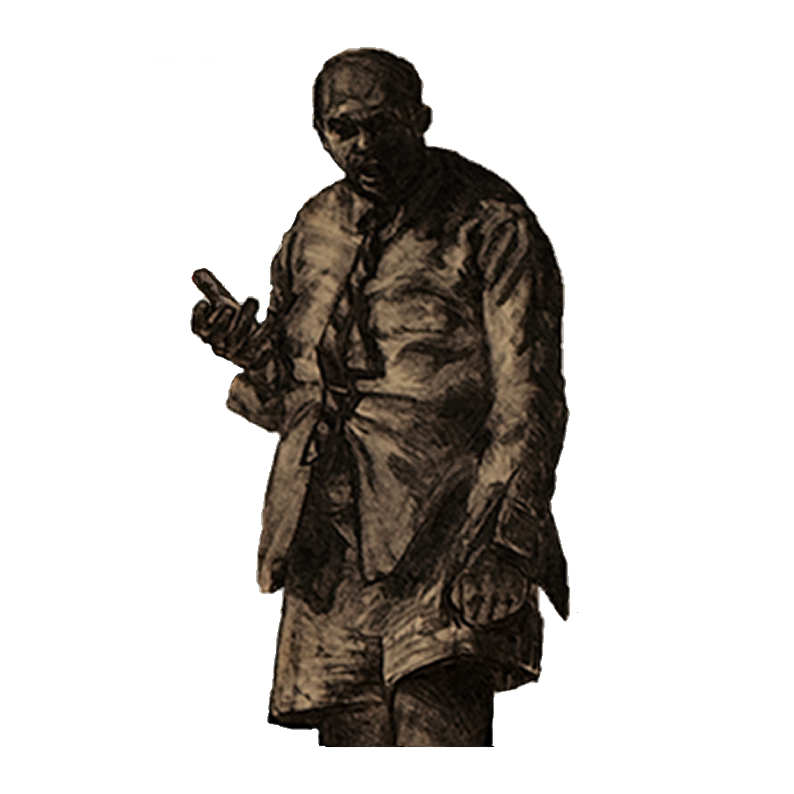
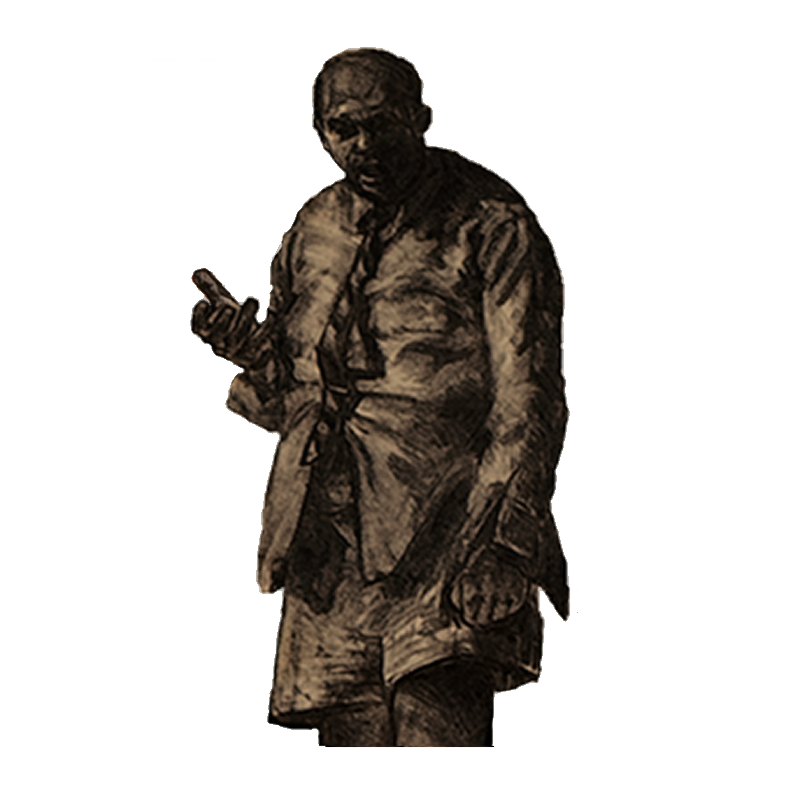
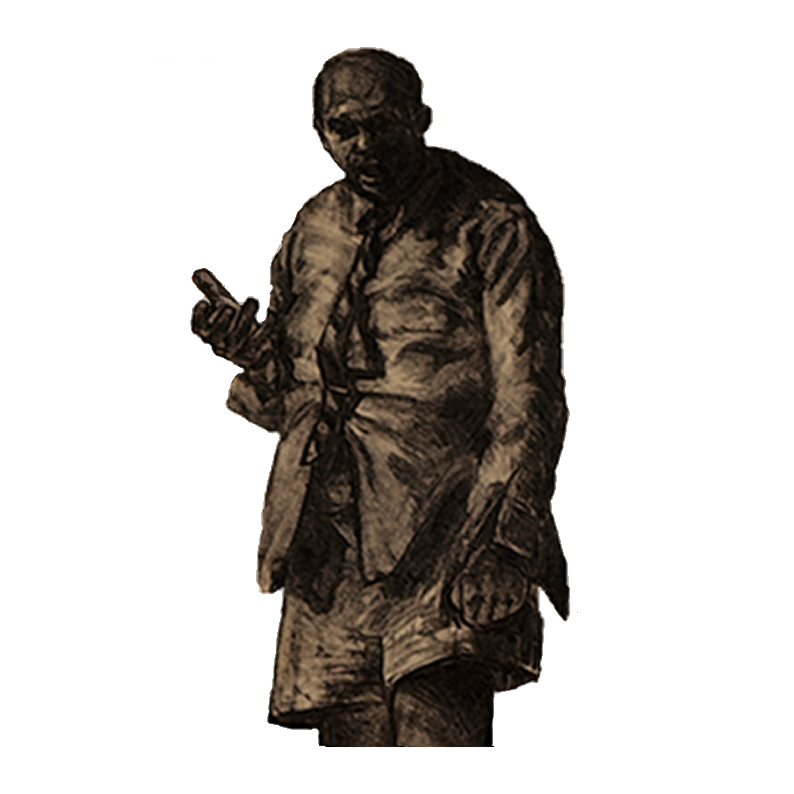
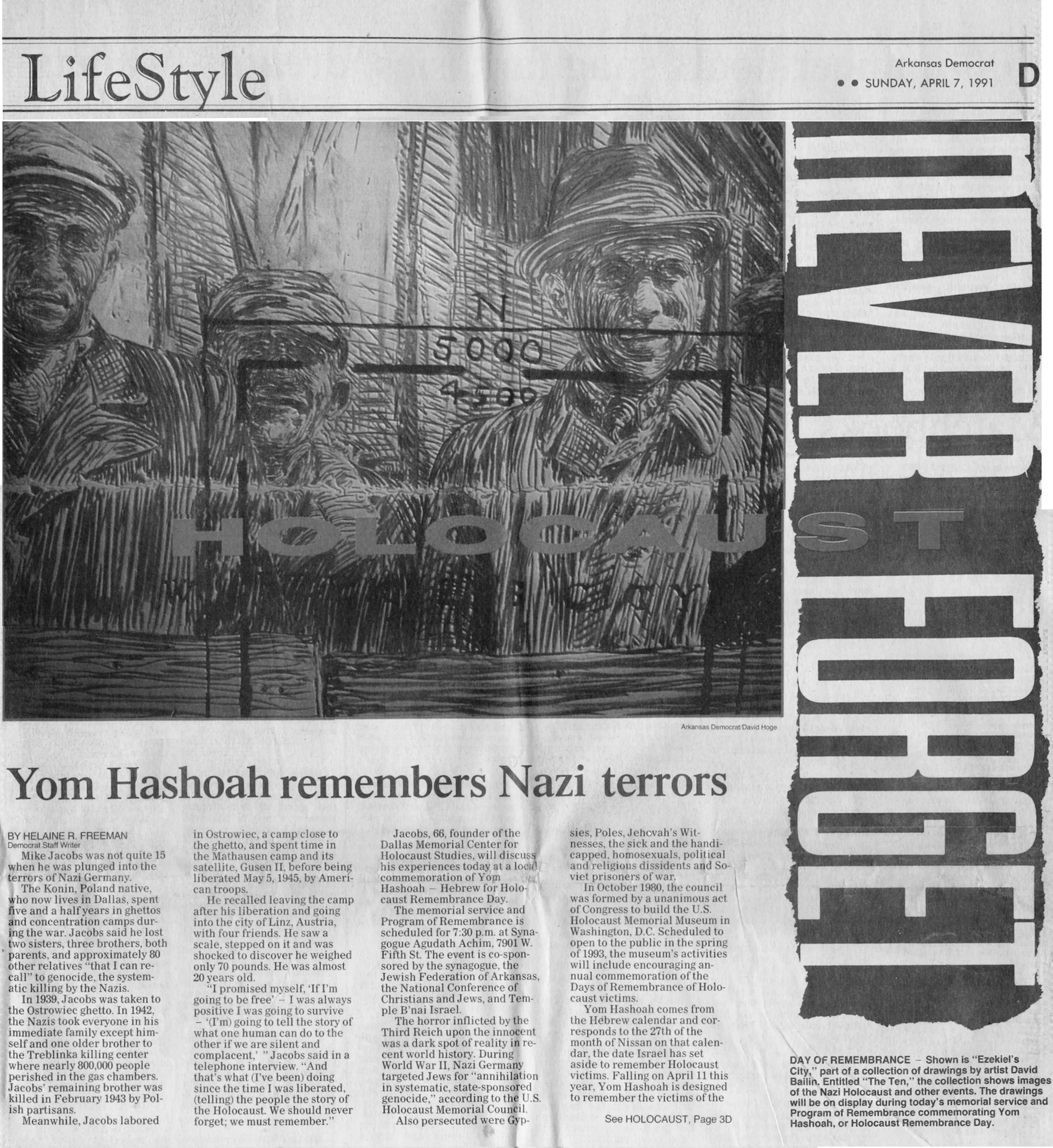
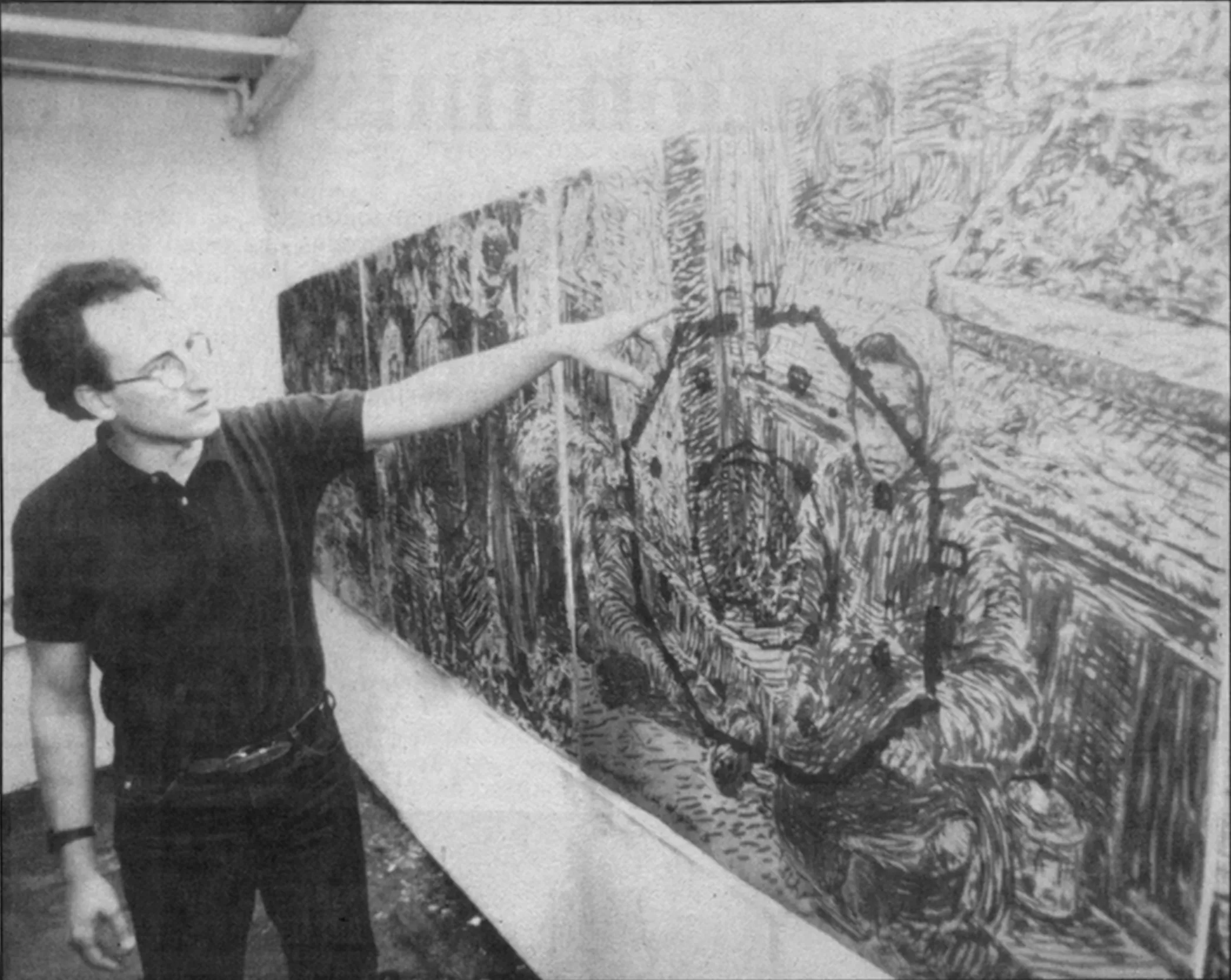
Also, as part of today's service and program, David Bailin, director of the Museum School of the Arkansas Arts Center, will present his collection of interpretive drawings. Titled "The Ten," these charcoal and oil drawings on gessoed paper will show images of the Holocaust and other events, with each drawing bearing a symbolic overlap.
In addition, the program will feature a special photographic exhibit commemorating the Days of Remembrance. The Jewish Federation of Arkansas and the National Conference of Christians and Jews also will sponsor a Dimensions of Holocaust Studies Workshop, to be held from 4:30-8 p.m. Thursday in the Fine Arts Center Auditorium • of the University of Arkansas at Little Rock. The teachers' workshop is a continuing effort to inform educators about the Holocaust.
Leading the event will be Nina Katz, who arrived in the U.S. in 1949 from a Displaced Persons Camp in Leipheim, Germany. Like Jacobs, Katz is a Poland native who spent much of her youth in ghettos and concentration camps. She, too, lost her entire family in the Holocaust.
"As an eyewitness to the European catastrophe, I came to realize at a very early stage of my life the importance of human survival," Katz once wrote, according to a news release. "My love for humanity has been expressed through a strong feeling of commitment and deep dedication to my work in this community."
Katz will take workshop participants on a mental trip to the Poland of the 1930s and 1940s and focus attention on overriding questions of responsibility, indifference, and democracy. The event will conclude with participants discussing lessons for creating a better future.
★ ★ ★